Uncovering Our True Selves Through Svadhyaya (Self Study) March 15 2026
- rockbriarfarm

- Mar 15
- 5 min read

As I enjoy time away in the beautiful Yucatan, I have been able to spend some time on my own practice including some time for meditation and reflection. This reflection that I have been attempting while walking the beach or practicing my asanas is a real challenge for me and dovetails with this week’s Niyama.
This week we find ourselves discussing the challenging practice of the fourth niyama, Svadhyaya, or self-study. This does not mean what our job is or what our likes and dislikes are; this study digs much deeper, to our core, the witness, the Atman. In Sanskrit, 'Atman' is the phrase for 'self' or 'soul', the true, eternal, and unchanging Self. While the practice traditionally includes reading spiritual texts, the practice is not just reading but deep self-reflection which (hopefully) brings positive change. You are discovering who you are at the core, not what the world thinks you are. Yoga Sutra II.44 tells us “Through self-study, one attains communion with the divine”.
Svadhyaya is difficult as is any honest introspection that follows one’s thoughts, motivations and actions. As we look inward, we are attempting to create a deeper connection with ourselves and those in our orbit. This exploration cultivates awareness of our fears, our likes and dislikes and our true nature; we are exploring that person we are when no one else is looking.
I find this work difficult and recognize that I sometimes hide behind the person I tell myself that I am versus who I truly am at the core.
When we embrace this study, and commit to addressing what we discover, we will ultimately be able to vanquish our negative samskaras. Samskaras are behaviors which are below the level of normal consciousness, the root of impulses, character traits and innate dispositions. We can think of them as hardened patterns or grooves in the brain, they are the imprints left by past experiences that fuel the formation of behavioral patterns.
As I have discussed in prior blogs, I have some samskaras that overwhelm my efforts to be my best (kind and present) self. The behaviors that I reflexively employ when triggered by thoughts and interactions with some of my closest family and friends are not always healthful to me or kind to them. Things that happen to us early in our life tend to be embedded deeply. I have been working hard over the past few years to break some of these habitual reactions to triggered emotions. These same relationships can also trigger happiness and joy, finding ways to parse my reactions is a deep part of my self-study.
I read The Four Agreements many years ago and find myself returning to the wise wisdom I found there. The author, Don Miguel Ruez talks about no matter how much we want to change something in our life, if we keep repeating the same behaviors or habits (samskaras), we can hardly be surprised that the outcome is not different. The idea that one “cannot control what is going to happen around you, but you can certainly control your own reaction” is so empowering. What makes us healthy, honest and present is not what is happening around us, but how we choose to react to it.
I believe that when we study ourselves honestly, we reveal the samskaras, that cause us suffering and can gain the power to change or shift them. Instead of focusing outward to the world and those in it, we bring the light inward considering how much control we have over our own choices.
There are many ways to begin this practice. I find that reading some spiritual texts that inspire me are a helpful start. Some of my favorite books are the Bhagavad Gita, bible passages or yoga texts like The Heart of Yoga. I spend some time thinking about controlling my reactions with breath work and counting before speaking. Other ways to practice this self-study could be:
Practice Mindfulness – Finding ways to be present in the moment. Noticing the world around us, not multitasking, not constantly having a phone in hand. Invite mindful moments into every day.
Be Reflective, Not Reactive – This is a constant practice (effort) for me. I try to acknowledge and notice my tendency to immediately react to a situation or comment. If it is an email or text, there should be no expectation for immediate response. If it is a conversation, pausing to breathe or count to 5 gives me the space to consider the situation and appropriately react, or not. Sometimes the best reaction is none. When this happens, it provides the space to make choices aligned with my best self.
Explore & Question - Self-awareness is a journey (a practice) not a completed task. The self-study can help nurture our curiosity about our core selves and where we fit in the world. Perhaps this introspection will find us embarking on a new hobby, interacting with a spiritual or literary community or learning a new language!
Through curiosity and practice, we work to return home to who we are at our core.
Our Practice – Sukhasana-Easy Pose

As we practice Svadhyaya we likely find ourselves trying to meditate more (or to start a meditation practice). Sukhasana is derived from the Sanskrit work sukha or ease and asana or posture. If you are like me, you find meditation a challenge in general, and finding a comfortable position is part of that challenge. At its origin, yoga asanas were 5 poses, all seated, with the goal of a meditation practice. I like to return to a seated pose as we focus on Svadhyaya, even if Sukhasana, for me, is not always “easy”.
Starting with a short 3–5-minute meditation is perfect. While accessible to many, if you are seated at a desk all day or have tight hips, sukhasana can be anything but “easy”:
Start seated on the mat and cross your legs. Placing a folded blanket under your buttocks to tip you pelvis ever so slightly forward/neutral may be helpful.
If coming to sukhasana for meditation, perhaps sit on a meditation cushion or a stack of blankets. You will adjust these props so that your pelvis is neutral.
If your hips are especially tight, placing blocks under each knee can provide support and comfort. You could also practice against a wall providing additional spinal support. If you do practice in one position for a long time you may want to switch the legs partway through your practice.
When we start in sukhasana activate the core and focus on keeping the spine long and crown to the sky. If using the posture for meditation, either soften the gaze or gently close the eyes and begin rhythmic breathing.
As we settle into the pose, we can become aware of our posture and make subtle adjustments to find the “suhka” or ease in the pose.
As we relax and breathe, we can find calming energy for our mind and body.
And, if for you this is not your best pose for beginning meditation, choose the one that works for you. This is your practice.
Meditating on Svadhyaya
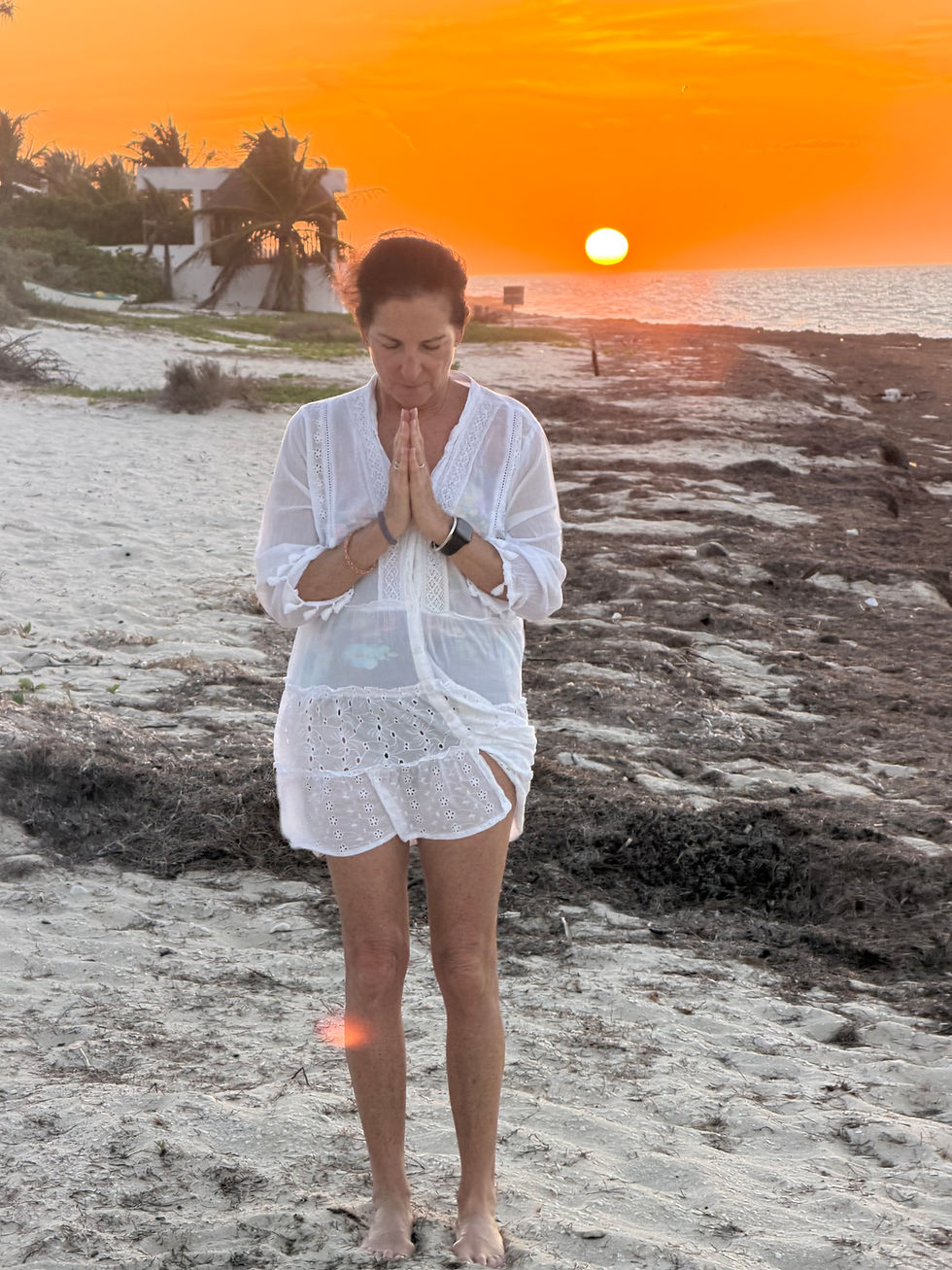
Let’s remind ourselves, yet again, about the purpose of yoga. Sutra 1.2 tells us “The restraint of the modifications of the mind-stuff is Yoga”. As we work and learn to control our mind (through meditation, breath, asanas, contemplation) we will achieve the goal of yoga.
"Learning to be present with yourself and to abide in that which is steady and comfortable does not allow space for self-judgment. When you live this way, you are practicing yoga: you are living fully.” ~Judith Lasatar
“Knowing others is intelligence; knowing yourself is true wisdom. Mastering others is strength; mastering yourself is true power.” ~ Lao Tzu
See you on the mat,
Namaste,
Julia Anne


Comments