Cultivating Santosha: Finding Contentment on Our Mats and in Our Lives March 1 2026

Updated: Mar 1
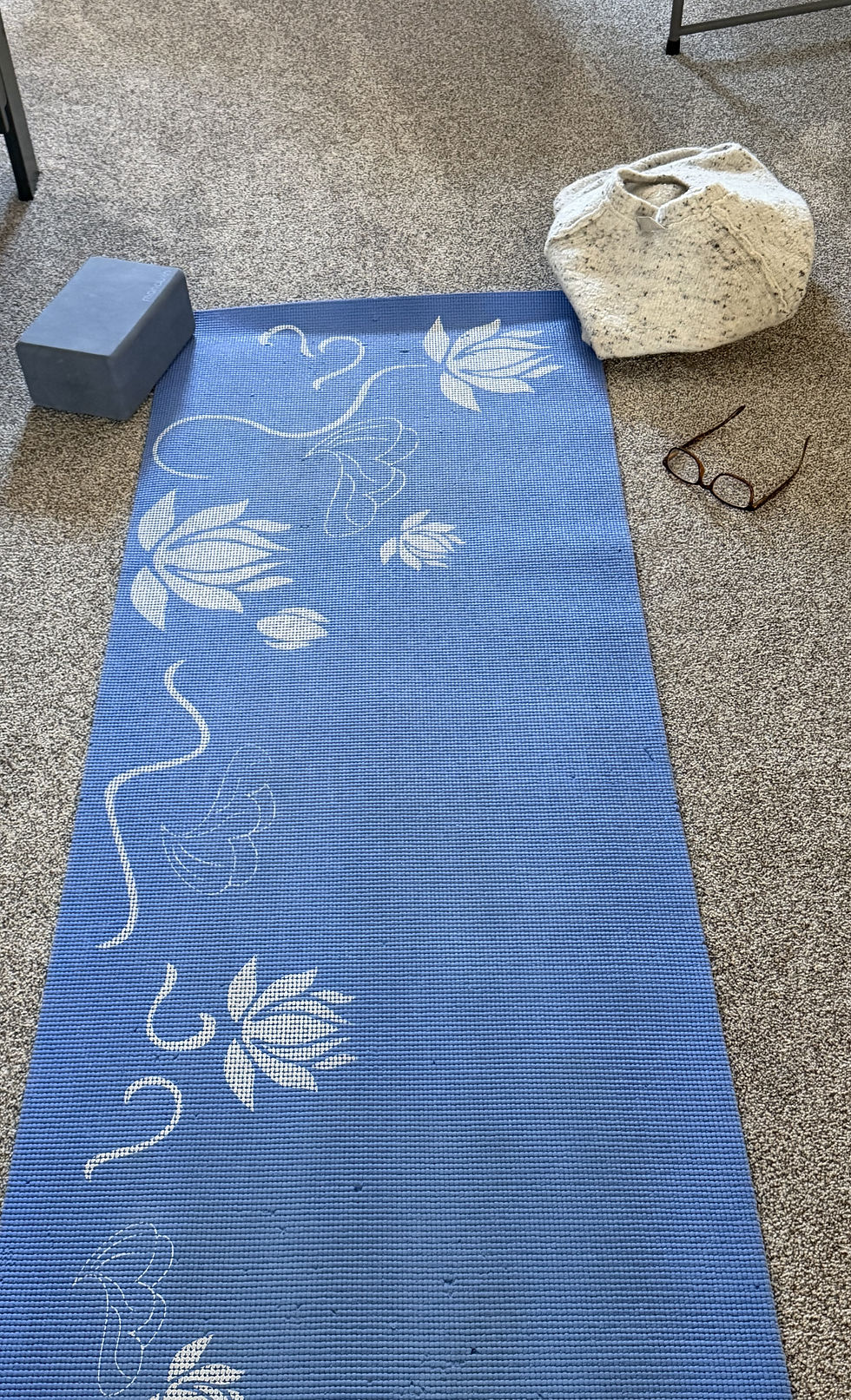
This week we continue our exploration of the Niyamas, the second limb of yoga. The second Niyama is Santosha. Derived from the Sanskrit word meaning “contentment", Santosha is a state of being satisfied with the present moment, regardless of external circumstances. It transcends current situations or material possessions; it is about finding or recognizing joy in the present.
Many of us find ourselves thinking, if only I had this (fill in the blank), I would be content. Or, if this situation (fill in the blank) could be different, I would be content. Santosha, or true contentment, is a practice of finding joy, peace or satisfaction in the present moment, regardless of external happenings.
Traditionally, as yogis followed the eight-limb path, Santosha, or true contentment was considered integral to spiritual growth. Today, while we may still follow the eight-limb path for spiritual growth, many of us use our practice to help us find a more balanced, stress free way of life. No matter our motivation as yogis, we are using our yoga practice to improve our way of being both physically and mentally. Santosha, contentment, is integral to that growth!
As I reflected on this Niyama this week, I was surrounded by a blizzard of snow that I had not seen the likes of since I was a teenager. Yes, like a true Rhode Islander, I am referring to the Blizzard of '78. The snow was piling up, we had no power or internet, and my husband, Peter and my adult son, Luke and I were trapped in the house. For three days. No internet. AND…I LOVED it. I found myself in the ultimate state of Santosha. Completely content and full of joy. I had some of my favorite people around me, trapped and unable to leave. We were “forced” to play Scrabble, Monopoly, make popcorn in the fireplace, read and just be together. I baked bread and read two books. And while I could not get to my studio, I rolled an old mat out on our third floor and practiced alone in silence. The contentment was complete, and frankly, I was sad to see it end.
As the Buddha said, “The only constant in life is change”. Our possessions, relationships, and even our bodies are subject to flux. By clinging to these transient things, we set ourselves up for disappointment and pain.
There is a difference between contentment through acceptance and giving up. Santosha or ‘contentment’ doesn’t mean idly sitting back and relinquishing all goals and responsibilities. It simply means accepting and appreciating what we have and who we are and moving forwards from there.
In our asana practice we can achieve santosha by relaxing into a pose rather than straining or forcing ourselves into it. We can accept where our body is now and let go of images of how we think it “should” be. I find when we practice a pose that may be challenging for us on the mat, it teaches us lessons about challenging ourselves off the mat. When we find ourselves facing uncomfortable yoga positions, we learn to modify and adapt and accept. The ability to compromise, modify or adapt is vitally important in all aspects of life.
We can cultivate Santosha in our yoga practice and in life by focusing on our progress versus the end result of whatever we are doing. We can incorporate moments of recognizing gratitude for what we have and where we are daily rather than on what we do not have. Finally, I suggest we find time every day for time spent on activities that we enjoy. Finding Santosha.
Our Practice-Santosha on the mat-Eka Pada Rajakapostasana-Pigeon Pose

I always choose this pose when I talk about Santosha. It can be such a challenging pose for many, it can be quite uncomfortable, especially when we “push” ourselves too far.
In our asana practice we can achieve Santosha by appreciating our bodies for what they can do, embracing where we are in a pose rather than straining to achieve some position that we think is how it “should” look, meanwhile perhaps risking injury and pain.
As I grow older, (and grow in my practice!), I am learning acceptance; backing off, using props and modifying when my practice calls for that. Finding gratitude for what our body can do versus being disappointed by what we cannot do is practicing Santosha. When we practice a pose that may be challenging for us on the mat, it teaches us lessons about challenging ourselves off the mat. When facing uncomfortable situations, we will be more apt to find modified solutions and alternatives, adapting and accepting with contentment.
Although it can be challenging and a bit uncomfortable, Pigeon Pose has many health benefits. Physically, it stretches and opens the hips, stretches the thighs, glutes, piriformis, and psoas muscles. Internally, it is thought to stimulate the abdominal organs and may aid in digestion. It can work well to relieve sciatic and back pain. Yogis believe that emotions can be stored in the hips and so opening them in this pose can release them.
Meditating on Contentment

“Be content with what you have; rejoice in the way things are. When you realize there is nothing lacking, the whole world belongs to you”. ~ Lao Tzu
Let gratitude be the pillow upon which you kneel to say your nightly prayer. And let faith be the bridge you build to overcome evil and welcome good”. ~ Maya Angelou
Nurturing With Food – Comfort Food For Contentment – Kamut Kushari

Several years ago when Peter was away and I was trying to find something to have for dinner, I found a bag of kamut, a grain I like but do not cook with often. I tried a recipe on the bag with a few modifications and found a delicious vegan comfort food! Kushari, an Egyptian dish is naturally vegan, meaning we don’t have to remove things or substitute, which to me is the best kind of cooking. This version of Kushari uses wheat berries (kamut) instead of the rice found the traditional Egyptian recipe. While you can use any lentils, I suggest the brown ones, cooked till almost done (as you drain them they continue to cook a bit). The brown ones tend to hold their shape well although the flavor of the red ones are delicious. You cant go wrong with any of them.
See you on the mat!
Namaste,
Julia Anne


Comments