The Significance of Child's Pose for Enhancing Physical and Emotional Wellbeing June 14 2026

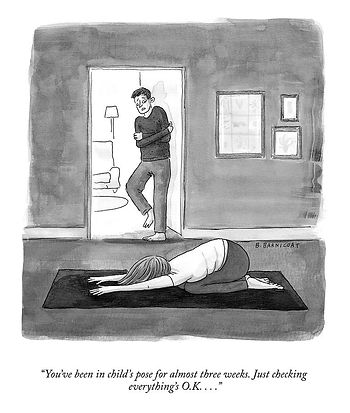
One of my regular students generated a conversation in class last week about the power of child's pose. Most practitioners love it, myself included, but I have found it challenging at times. More on that later. I spent a little time talking to other yogis about why they love the pose and did a little research as well.
For many, child's pose acts as a reset button for the mind and body. While practicing, if we find ourselves fatigued, we can come back to this pose, take some breaths, using the pose as a safe resting posture before rejoining. If we are just feeling out of sorts during the day, finding child’s pose, like a little cocoon, can help restore our sense of calm. The pose activates our parasympathetic nervous system, helping us to lower stress.
The physical benefits include lengthening and stretching the spine which helps to relieve tension in the shoulders and the upper and lower back. The hips are opened and flexion is promoted. Some practitioners report that the belly to thigh pressure stimulates internal organs and aids digestion for them.
The pose has strong emotional benefits as well. Forward folds (which this pose is), combined with the forehead resting on the floor, stimulate the vagus nerve which calms anxiety and slows the heart rate. That position can feel stabilizing and grounding. The pose’s relative simplicity encourages relaxation and supports mindfulness.

I have invoked this powerful pose in the past when discussing Brahmacharya (the fourth Yama - avoiding excess or practicing moderation). Sometimes when I practice the pose I can really focus inward, like I am in my own little private cave, blocking out all of the sensory stimulation around me; the pose allows me to focus on my breath and find inner calm. I like the way the pose is just enough, what we may need during a crazy day or as a pause during a more vigorous yoga practice. The pose says to us that right here, right now, this is enough. We do not need more, there is no need for excess, right, here, and right now all is good!
Renee Marie Schettler, of Yoga Journal says:
“I didn’t understand Child’s Pose for the longest time. That is, I understood the mechanics of the pose, but I misunderstood its intent,” In my early years of practicing yoga, Child’s Pose was something the teacher told us to do when we were exhausted. I took it to be something that was an alternative option, something ‘less than’ the more challenging poses. While in Child’s Pose, I remained tensed and ready to pounce on the pose that followed. Only in recent years, after practicing more Yin, have I started to comprehend the innate and exquisite value in quiet and stillness and surrender, as well as the release and strength that proceeds from that.” I love this observation.

While the pose is relatively simple, some of us who have had some hip issues or tightness can find the full expression challenging. For a good year after my hip surgeries, I found the pose difficult. I found placing a block under my forehead to be very helpful. If your knees or ankles feel uncomfortable, you can place a yoga block or rolled-up towel between your hips and heels for extra support. A blanket under the knees or under your hips is also quite lovely!
This week we will explore child’s pose together.
Meditating on Restorative Postures

"The primary aim of yoga is to restore the mind to simplicity, peace, and poise, to free it from confusion and distress." — B.K.S. Iyengar
"Resting is a radical act. It is a declaration of our intrinsic worth, separate from productivity or accomplishment." — Judith Hanson Lasater
See you on the mat!
Namaste,
Julia Anne


Comments